2017年7月3日月曜日

Report on the workshop 'Menstrual Hygiene Management and Re-usable Sanitary Pads making'

The workshop of Menstrual Hygiene Management and Reusable sanitary pad training was conducted by Our partner NGO, SORAK Development Agency in April 10th and 11th in Mubende district, Uganda.

Male teachers attended this workshop and explained the discussion about MHM

The goal of this workshop is to equip pupils, parents and teachers with knowledge and skills on Menstrual Hygiene Management(MHM) and making of reusable pads.

By the end of the training participants were expected to:
・Learn how to make reusable pads.
・Have a clear understanding of the MHM and be able to explain it to their peers.
・Understand their individual roles and responsibilities in MHM.

In this workshop, 30 children (21 girls and 9 boys), 6 teachers, 3 parents were selected as participants.

Participants in group discussions discussing parent’s roles in MHM promotion

The highlighted features are to involve BOYs in this workshop to raise their awareness for gender-related matters (no more bullying to girls) and select parents having a child at the targeted school with also a sewing machine for the purpose of the alternative income created by themselves through sawing re-usable sanitary pads for sale.


Parents to adolescent girls /tailors owning sawing machines participate in the demonstration

Parents cutting materials for the training


These activities contributed towards promoting more understanding of MHM by all participants in group discussions, question and answer sessions, group presentations, sharing of personal experiences.

Group 3 members presenting roles children, parents and teachers play in promotion of MHM
Angellah of Kibalinga P/S  takes alead of her group
Halima of Lwawuna P/S leads a discussion on how girls feel about Menstruation
Trainer demonstrating how to make re-usable pads to participants
Trainer demonstrating how to make re-usable pads
At first, boys felt shy and thought that MHM is associated with girls only, though they fully participated in group work and later they became comfortable and freely started talking about menstruation with girls.


Wasswa from Lwawuna P/S presenting boy’s involvement in MHM


All participants were able to understand their individual roles and responsibilities in MHM.

※Roles and responsibilities in promoting MHM
Children: Knowing their menstrual cycle, proper disposal, care and management of used pad (both disposal and re-usable)
Parents: Providing pads for their children, sensitizing their children about menstruation and also providing a favorable environment at home for girls like separating girl’s rooms from boy’s
Teachers: providing a concussive environment at school like separating girl’s toilets from boy’s, stocking pads at school to help girls in case of emergency


At the end of the training participants were asked to evaluate on the following;
 30 out of 39 participants promised to use and apply the newly acquired skills if availed with the materials.
 35 out of 39 participants recommended for project extension for other adolescents to benefit from other schools.

Adolescent participant perception of day one’s training

By the end of the training participants were knowledgeable on key issues of MHM.

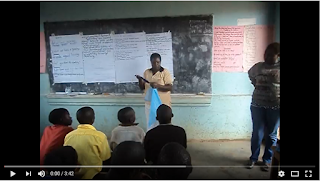
Movie is the lecture for how to use reusable sanitary pad. Boys join and look so FUN‼
Please click this movie↓↓↓
https://blogger.googleusercontent.com/img/b/R29vZ2xl/AVvXsEjvpscSTDJVe-gfpLjtLImxqP2ZCcvtyWsQXkX0qrN2P_0Zdr6muqBzGQOQSYwqrING7UM-ls-JzwT8YnfiX_AYIewK9vEdRTgnCuEyeMtfFLfiIYtvQ_AGipZdGgLDpAccPXDTIGO3n-xF/s1600/%25E5%258B%2595%25E7%2594%25BB%25E7%2594%25BB%25E5%2583%258F.PNG


The detail report is as following report.

*This project is supported by Lush Japan Co., Ltd.


*GBN's Facebook*


2017年6月28日水曜日

The first anniversary of GBN's foundation!


Hello everyone!


Greeting from Global Bridge Network (GBN)
I am so glad to inform you that we are celebrating the first anniversary of GBN's foundation!

This first year, we had so many tasks to prepare building GBN and discussions about what we do. At the same time, we struggled on management of our time since we have full-time jobs. With people’s support and cooperation, we managed to overcome such challenges. GBN appreciates the support from all our partners.


Regarding International Support, we stared new projects below with our great partner, SORAK a local NGO in Uganda.

'Improvement of Educational Environment for girls' with the fund from LUSH Japan.

'Environment Protection and Education' with the fund from Japan Fund for Global Environment (JFGE).


SORAK plays an important role to implement projects and I believe without this collaboration, GBN would not be able to start. We truly appreciate this great collaboration and partnership with SORAK as a team!

Moreover, we held various fun events such as 'African Night' in Japan and so happy to see participants enjoyed!

This year, we are continuing with our previous projects with SORAK and looking forward for new projects hopefully. We are also planning to hold some events such as 'Uganda night' in July and 'African dance and music' in August, in Japan.


One of our BIG plans of this year is to hold a dinner show to invite world famous musician to Japan. We will let you know the details when time comes!


Please keep checking our posts on FB and HP as we inform/update on our events and reports of ongoing projects.

We really appreciate all your attention and support for GBN.

Best Regards,
Maiko Ohnishi

LOVE&GBN


http://globalbridgenetwork.org/en/

*GBN's Facebook*


2017年5月24日水曜日

Implementing our new project “Environmental Protection through Expanding Lemon Grass Growing and Education in Uganda”

We are very happy to update you about our new project in Uganda!

Deforestation and drought are becoming a serious challenge in Uganda.
We saw a lot of trees cut down for firewood and drought makes soil to be poor, which seriously affects people's livelihood since a majority of people are farmers.


The once evergreen tropical rain forest on Kibalinga sub-county-Mubende District is no more; a victim to combined charcoal burning to give way to arable farming.


We start a new project!
"Environmental Protection through Expanding Lemon Grass Growing and Education in Uganda"

Project Period: 2017/4/12018/3/31


To promote environmental protection through lemon grass growing and environmental education in unproductive areas of Mubende and Kyeggeggwa districts of Uganda


Project Overall and brief information is here. please click!!!!
↓↓↓


A farmer grows lemon grass in barren area with SORAK Executive Director(Right)


This project is supported by “Japan Fund for Global Environment(JFGE)”.

We are really pleased to this opportunity and will promote environment protection in Uganda with SORAK Development Agency our implementing partner in Uganda.

GlobalBridge NetworkGBNplays the role of an agent to support this project which SORAK conducts for environmental protection through growing lemon grass and income generation.

We hope that lemon grass rejuvenates soil, improves environment, and people enjoy their green circumstances in Uganda.

We strongly believe our project will achieve significant impacts to people.


Lemon grass essential oil distilled by SORAK


GBN would like to conduct a sale of lemon grass tea in Japan someday soon so that people can enjoy such lemon grass tea from SORAK, and which can connect to their supports

GBN hopes to be bridge between them… in order to do this, GBN will continue to collaborate with SORAK.


Thank you for your attention!!!


GBN ‘What We Do‘↓↓↓


2017年4月12日水曜日

<Abridged Baseline Study Report> 'Combatting Menstrual Hygiene Management Challenges to Stop Adolescent Girls’School Dropouts in Uganda'

Hello, everyone!

This is the activity report on the baseline survey of our project 'Combatting Menstrual Hygiene Management Challenges to Stop Adolescent Girls’School Dropouts in Uganda'.


The project was designed to combat high rates of school dropouts among girls in Uganda.

Many girls cannot afford buying sanitary pads during their menstruation and try rudimentary methods like old clothes.The boys bully girls when they have blood leak and which makes it very inconvenient for the girls to continue attending school due to fear.


To respond to the above problem, we start our project.In order to implement our project effectively, we carried out the baseline survey for school girls to understand their current situation. This assessment was implemented by SORAK, which is a local NGO operating in rural areas.


***Abridged Baseline Study Report***


Girls at Precious child center listen to a briefing
before the assessment at Precious child learning center


Background

The study was between 3rd- 4th April 2017 targeting three primary schools; Precious Child Learning Centre- an NGO operated for Orphans and Vulnerable Children (OVC), St. Josephs Kibalinga- government aided and catholic founded and Lwawuna Primary School – a government aided and Muslim founded.


This assessment aimed at establishing the knowledge attitudes, practices of menstrual hygiene management among rural ‘in school’ adolescent girls in order to benchmark the existing situation for future informed intervention. The findings will further provide valuable information that is necessary for the planning and designing better and effective girl child friendly intervention projects: which is necessary for vulnerable girls’ completion of basic education and enhancement of women empowerment. A team of four females conducted this study: Emilly Katamujuna- Team leader, Hadijah Nakiruuta – SORAK programs manager, Elizabeth Nakinobe and Milly Nalugya - research assistants during the assessment.


A research assistant explains at Precious child learning center

Methodology
The study took the form of interviewer-administered questionnaires due to the low literacy levels of the interviewees. It commenced with a 30 minutes briefing about the topic of the assessment where girls who had started on their menstrual cycle were the only ones targeted.


The study targeted only girls and by only women. First, we took girls through:

·       What is Menstruation and what causes it?

·       Challenges girls face during menstruation.

·       Menstruation bodily and emotional changes before and during menstruation.

·       Menstruation proper hygiene management and care.

·       Demonstrated how to wear a pad (disposable and re-usable pads).

·       A brief explanation on how different girls react for instance; fears, terrified, and feel out of place and that everyone’s eyes are on her. They will either miss school or come to school tying their bums with additional clothing like sweaters.


Team leader –Emilly and team talks to girls before commencing
with the assessment at St. Josephs'Kibalinga Primary School


Results

The study targeted 150 girls who were already undergoing menstruation. However, we reached only 84 girls altogether, where, 04 girls were from Precious Child Learning Centre, 43 girls from St. Josephs Kibalinga, 37 girls from Lwawuna primary school, because this was the only number of girls in the three schools who were undergoing menstruation at the time of the study. In addition, the study took place after primary seven girls had left school yet these form the majority of girls experiencing menstruation.


Among the challenges:

1.    The questionnaires had so many questions/a large number of questions, pupils almost lost concentration towards the end.

2.    Some girls do not know their age and the date of birth and months.

3.    Some girls lack adequate knowledge concerning their menstruations. For example, some of them do not know the number of days each of their menstruation period lasts and the average number of weeks are there between the start of one period and the start of the next period


Research assistant shows sanitary pad to girls
 at St. Josephs’ Kibalinga Primary school

However, to reduce the bias such challenges could have on our study results, we gave girls enough time for them to reflect on their past menstruation period to estimate the dates when it could have started and ended. The study team also provided adequate time and explanations in order to come up with concrete data; at Kibalinga Primary School where the assessment went up to 6.30pm instead of ending by 1:00 pm as initially planned. In other schools, namely Lwawuna and Precious Child Learning Centre, the study was between 9.00 am to 1:00 pm as earlier planned. This is because, the study team could learn from day one experience at St, Josephs Kibalinga Primary school. Overall, the study succeeded because both the girls and school management were very interested and cooperative.


Girl undergoing assessment
at St. Josephs’ Kibalinga Primary school

Lessons learnt by the study team:


·   When dealing with adolescent girls we need to get consent from their parents, this will be crucial when we start sex education, gender awareness and re-usable sanitary pad making. This is because talking about sex is traditionally a taboo and when parents learn that we are teaching their children sex education they could miss understand that we are teaching children immorality.


·   Parents are very shy and hesitate to talk about menstruation with their children. The assessment indicated that girls fear to talk about sex and need to get authority from parents. Thus, we need to engage parents during training of reusable sanitary pad making, sex education and menstrual hygiene management as well as gender awareness activities. When parents attend such activities, they will discover and appreciate that what the project is doing is for the good of their children.


Research assistant brief girls at Lwawuna primary school

In conclusion, based on the above lessons learnt, the plan is to involve one parent – a woman with a tailoring machine from each school. These can work with teachers and children to make the project sustainable. We have learnt from another success in Mityana district where a parent involved has made sanitary pad making a success. Therefore, as regards the sanitary pad-making project, we will bring in one-woman parent with a sewing machine per school.


Girls look at research assistants demonstrating sanitary pad 
at Lwawuna primary school

***End***


Being a developing country, Uganda still faces setbacks due to various socio-economic challenges and as compared to developed countries,
vulnerable groups including adolescent girls in poverty are going through very harsh conditions. We are committed to continue supporting Uganda’s school girls in order to create a conducive environment to ensure that these girls can stay in schools during their menstruation and complete their education.

Here is the report on baseline survey,
MHM Baseline Survery Report _April 2017.pdf

We really appreciate your any support and cooperation!!


*GBN's Facebook*


2017年4月5日水曜日

The LUSH Charity Bank will support our New Project!!


Great News!!


We received the fund from LUSH JAPAN!!


Reference:


➡ GBN's brief introduction will be featured on the label of 'Charity Pot', the hand and body lotion♪


♪♪♪♪The New Project will commence from April 2017♪♪♪♪


Improvement of school environment to combat Menstrual Hygiene Management (MHM) challenges to Stop Adolescent Girls School Dropouts in Uganda


-Training of reusable Sanitary Pad Making, Conduct Sex Education and Menstrual Hygiene Management, Gender Awareness etc.-


This project will be implemented in collaboration with the partner local NGO, SORAK
(Thank you the team members, Muhammda and Hadijah from SORAK)


The highlighted features are

Involvement of boys to raise their awareness for gender-related matters (no more bullying to girls)


The shade will be constructed at the school where a reusable sanitary pad making will take place with groups; children, teachers and parents. Some pads will be made for sale for income generation.


Lastly, we will conduct the impact assessment!


*GBN's Facebook*

2017年3月22日水曜日

【Partner】Bereesera (Ms. Yoshino)

It is our pleasure to introduce Ms. Akane Yoshino, a founder of Bereesera.
Bereesera provides opportunities for women in Uganda to support themselves by producing beautiful handicrafts made from leather and kitenge, local colourful fabric.


Ms. Akane Yoshino with beautiful products


Bereesera”means “shiny”and “attractive” in Luganda (the local language) and is a wish that their original crafts produced by leathers and colorful and beautiful “kitenge” (African cloth) will be attractive and shiny forever for customers.
Here is the link https://www.facebook.com/Bereesera/


This following message is from Ms. Yoshino!

<Reasons for starting this activity>
I started up this volunteer group “Bereesera” as a continuation from an activity led by a Japanese volunteer who left Uganda in January 2015. The activity involved the production of handmade goods made by combining Ugandan leather and traditional African cloths with the aim of supporting single mothers by increasing their income. Although I had been working with an NGO in Japan, I had no experience in handcrafting. Together with a single mother called Najuma who was trained by the Japanese volunteer, we eventually started this activity from zero after taking over the pattern paper they had been using and necessary equipment for the leathercrafts.

Ms. Yoshino and Ugandan women who are making leather crafts 
Thanks to the tremendous support from other Japanese people, the activity has been developed successfully.

We have been working since 2018 with an NGO called “KISINGA WOMEN’S GROUP,” which became independent from another women’s NGO group we had been supporting, and using their work space has made it easy for us to focus on the crafts.

We do not limit the group members to single mothers, but also include single women and even those with spouses. In Uganda, women do not usually have control over family finances and having spouses itself does not help them to be economically independent. Therefore, instead of limiting members to single mothers, we currently welcome and support all women who want to become economically independent through this activity.

Cute smile!

<Uniqueness of Bereesera products> 
The uniqueness of our products stems from the elaborate hand stitching carefully sewn by our single mothers. The hand stitching makes each product unique as well as ensures that more women can be involved. The combination of the best leather and kitenge fabrics produces attractive products that will appeal to a variety of customers.

Ugandan women is making a leather item carefully
Working with her cute baby!
This is a hard work because this leather is thick...!


Our product line is gradually developing each year. A recent hit from our products is the Shoebill key ring. The Shoebill is a prehistoric looking bird which lives in some of our swamps and is also becoming popular in Japan. Since Uganda is famous for its Gorilla trekking tours, gorilla key rings are also among our best-selling products, and our bags in all sizes, cases for glasses, and small purses are in great demand as well. For those who live in Uganda, we make custom-made products with their choices of leather and cloths, which make them the only one in the world.

Shoebill key ring!
You can meet shoebills in Ueno Zoo, in Japan.

Mountain gorilla key ring!

<Relationship with the women’s group>
Since I came to Uganda to accompany my husband for his work, I will have to leave here someday eventually. The group members will have to take over the work I am currently responsible for and I need to keep supporting them to make this activity sustainable. There are still many tasks that Japanese volunteers are in charge of and that the group members are expected to learn, such as purchasing of leather and fabrics, quality management, development of new designs, communication with customers, and sales preparation. In order to share these roles, we need to train more women and continuous support will be necessary.

We are hoping that the existing members would be the trainers for new members and that more women in Uganda can earn a stable income by having this handiwork opportunity.

Event in Uganda.

We still have a long way ahead for them to become independent, but their skills have been remarkably developed and they are more committed to the quality of their products. We sometimes hear them saying “kawaii” (pretty, cute, lovely) when they make fine products.

Since we do not own our shops in Uganda, the major funds are from sales at events or sales on consignment. We are very thankful for the sale of our products in Japan through Global Bridge Network (GBN) and it has been a great encouragement for women in Uganda.

         
Bereesera, Ms. Akane Yoshino


Thank you very much, Ms. Yoshino!
Have a look at Bereesera's stock list from here!
If you have any questions or inquiry, please contact us from our web page.