2022年2月28日月曜日

【Educational Environment】 Monthly Report Jan 2022 “Happy-Pad Promotion Center, Radio Talk Show, and Schools Facilities’ Task Check"


The projects manager rising awareness about what needs to be done to ensure proper MHM in schools and sensitizing the community about the components of MHM during the second radio talk show

Promotion Center, Radio Talk Show, and Schools Facilities’ Task Check


<Activity conducted>

1.       Establish a happy pad promotion center in Wakiso

2.       Conduct radio talk shows about girls’ education and use of a reusable sanitary pad (happy pad).

3.       Make schools facilities’ task list (assessment tool to renovate)

4.       Check facilities of 30 schools in three project districts


1.      Establish a happy pad promotion center in Wakiso

A suitable place to work as the happy pad promotion center was identified at Katalemwa Secondary School-Matugga. The Executive Director concluded with signing the tenant’s agreement with the land lord of the place and paid rent for one month. The place is being improved in order to start using.


2.      Conducted radio talk shows about girls’ education and use of happy pad

These have been conducted with the help of a talking point document. This was developed by SORAK and shared in all districts. It indicated what each one of the participating staff would mention during the radio talk show. A radio spot message script has been developed and it is being developed into an audio before starting to air.


In Mubende The radio talk shows were conducted on 25th January 2022 respectively at Heart FM in Mubende town for one hour starting at 7:00pm to 8:00pm. The talk shows were attended by the Executive Director, project manager, project officer for Mubende, and project volunteer. Issues talked about by each one of the above are outlined in the talking point/concept note.

In Wakiso

The radio talk shows will start in February.

In Butambala

The radio talk shows were conducted on community radios. These were conducted on Voice of Kikambwe and Voice of Butende community radios on 29th and 30th January 2022 respectively.  These were attended by the executive Director, project officer, and subcounty women councilor of Butende subcounty- one of the project sub-counties.


3.      Development of school facilities’ task list

It is noted that this project will undertake physical improvement in the MHM facilities in each of the 30 target schools across the three districts. It was found necessary to get back to each of the schools and with school leaders exactly identify what needs to be done in each of the schools. SORAK project manager hence developed a checklist to be used by project officers in their listing of what needs to be done.


4.      Check facilities of ten schools in all the three project districts

Project officers across the 3 districts visited each of the 3 districts and in all the 30 schools in order to identify tasks. It took 3 days to check all the schools Mubende and Wakiso (26-28th January 2022). Schools in Butambala were visited from 25th to 27th January 2022.


<Positive influences/ Changes>

The radio programs had the following influences in all the 2 districts;

Ø  Introduced the project to both the targeted and a wider audience. This was illustrated by the call-ins from various listenership including those not targeted in the project.

Ø  Listeners appreciated the project targeted issues of MHM and hoped that the project would do a lot towards improving girls’ education.

Ø  Some listeners requested for project expansion to their respective schools and communities while others requested to be allowed learn reusable sanitary pad making with schools to be supported in their respective areas.

Ø  Improved working relationship between NGOs and the political leaders as it was the case with Butambala where subcounty political leader (woman councilor) volunteered to participate in talk show. This means that the project was well received, has garnered political support and will be popular in the community and districts served.

The task finding visits had the following influences;

Ø  Prepared school teachers to accept the project and what is proposed to be done. And high hopes have been generated in all the schools.

Ø  Identified actual sites and what to do on each of the desired facilities (washroom/change rooms/ provision of water tanks).


<Problems / Challenges>  

Ø  Long distances to transport between schools during this dusty hot and dry season of the year.

Ø  All schools visited are over expecting to receive a lot of supports from this project due to JICA related. We demonstrated that we need to work well with this first project and make sure that we achieve many bigger interventions.

Ø  The head teacher of Kanyange Mixed primary school -Nabweru division Wakiso district was afraid of anyone taking pictures in school and instructed the deputy to check and ensure the project officer wasn’t a journalist. The project officer had to produce the introduction letter from the municipality to win their trust and later permission to take photos was granted to him.

Ø  Learners’ presence at school. Children were inconvenienced when they wanted to use toilets while we were assessing them and to this, the team was patient and also tried to visit the different schools during the time when they all in class and not for lunch and breakfast.


<Lessons Learnt>

Ø  It was discovered that all schools needed to be provided with a changing room as none of them had one yet it is so important when it comes to ensuring a conducive MHM environment in schools.

Ø  General hygiene was very poor in all the schools visited with none having a functioning water point/tank at the washroom/toilet.

Ø  Most schools still have shared WASH facilities (girls and boys). This interferes with each other’s privacy.

Ø  Evening hours are the best to air a talk show for greater impact.

Ø  Community awareness is instrumental for the success of the MHM project.

Ø  Engagement with leadership from village to district level was good and must be maintained for acceptance and sustainability of the project.


Comments from related parties


<Activity Photos>


Appendix 3: School facilities


↓↓↓Click on the following link to view related reports


*This project is implemented under JICA's Kusanone Partnership Program.

2022年1月26日水曜日

【Educational Environment】 Monthly Report Dec 2021“Improvement of school environment to combat Menstrual Hygiene Management (MHM) challenges for school girls"

 JICA Monthly Report Dec 2021

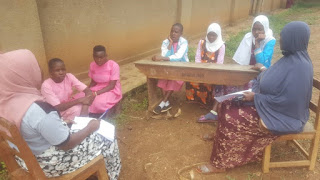
FGD with girls at Kasaana primary school in Mubende


Data collection Exercise from the three Districts for Baseline Survey

n  Wakiso 29th, 30th November and 1st December 2021

n  Butambala 28th, 29th,30th November and 1st December

n  Mubende 2nd to 3rd December 2021


<Progress>

Baseline data was collected from the respective schools, government officials and the school community members namely members on school management committee and parents and teachers’ association. This included an online questionnaire administered to 153 girls from the different schools, Focus Group discussions (FGDs) with the students both boys and girls, and the school community members, Key informant Interviews (KIIs) with the students, leaders, School Management Committee members and the government officials in each district. Observation checklists were also used to collect baseline data on the current situation of the water, sanitation, hygiene (WASH) facility of all of the selected schools. The facilities included; the toilets, washrooms, changing rooms and the water sources. School enrollment checklists were also used to find out the enrollment of girls as compared to boys and establish if there are any girls' dropouts related to menstruation. The survey findings were put together and quantitative data was analyzed using STATA in order to relate with the findings from the qualitative data. A draft report was finalized and submitted to GBN.


In Mubende; KIIs were conducted with the district Inspector of schools, head teachers of studied schools and chairpersons school management committee.

Children Focus Group Discussions were conducted in Kasasa, and Kasaana primary school, and online questionnaire and Key Informant Interviews were conducted in the following primary schools; Kasana, Christ the King, Ikula, Kasasa, CAWODISA.


In Butambala; KIIs with District Education Officer, District Inspector of Schools, Town clerk Gombe town council, Ngando Senior Assistant Secretary (SAS) and Bulo SAS were conducted. 

FGDs were conducted in Kiwala and Nkokoma primary school, and online survey and KIIs were conducted in the following schools; Kiwala, Nkokoma, Kitagobwa, Lwamasaka and Ntolomwe.


In Wakiso; KIIs with Municipal education officer, Assistant municipal education officer, head teachers of the schools under study and the respective members of the school management committees were conducted. 

FGDs were conducted in Maganjo UMEA and Ssanga primary schools and online survey and KIIs in Jinja Karoli, Maganjo, Ssanga, Kitungwa and Lwadda Primary Schools.


<Positive influences/ Changes>

The data collection exercise went on well as there was good coordination with the respondents including the students, government officials and the school management committee members.


In Mubende, the Head teachers of the respective schools would mobilize their staff and the students as well which made the exercise easy to conduct. In addition, the district officials were positive about participating in the survey and gave the necessary support that the team needed.


In Butambala, communication from the District Education Officer to the school head teachers made mobilization of students, school management committee and community members much easier. 


In Wakiso, the head teachers of all the schools welcomed us and even those that had experienced a similar project with Save the children loved the fact that they were to receive a sewing machine in case the project commenced in their schools which they didn’t have. The Head teachers were supportive and the government officials as they were willing to participate and guide the team accordingly which made it easy for the project team to have access to the required information.


The project was welcomed in all the three districts of Mubende Waksio and Butambala with high hopes of bringing positive changes to girls stay in schools. It was noted that it would support schools that had bigger enrolment as well as those that lacked support from other donors.


<Problems / Challenges>

Ø  The school enrollment information which would be used to complete the checklist was not readily available at the time of data collection in some of the schools and the team would call back to be given such information on the agreed dates.

Ø  Mobilizing teachers was challenging since the schools were closed due to COVID-19 lockdown. Many of the teachers had relocated during the school closure period seeking for income generating opportunities for survival. We however coordinated with the Head Teachers who called the teachers on scheduled times of visits.

Ø  COVID-19 was one of the challenges but this was addressed by making sure members observed standard operating procedures. The use of Sanitizers, face masks and avoiding crowds were emphasized in all the three districts.


<Lessons Learnt>

Ø  It was discovered that all schools that were visited did not have incinerators. Thus, girls who used disposable sanitary pads thrown away the used sanitary pads in the toilets. Such used pads piled up inside of the toilets and it is necessary to make the processes of taking out the pads from the toilets and this would call for an extra fee.

Ø  Some teachers were not aware that menstruation was one of the contributing factors to absenteeism by girls. In most cases the girl will not openly state that she missed school because of menstruation due to stigma associated with it and at times girls would be subjected to beating for dodging class in case they failed to present the medical receipts from the health personnel.

Meeting and KII with Ngando Subcounty SAS in Butambala

KII meeting with the headmaster of Bule Primary school in Bulo Subcounty in Butambala
FGD with girls of Kiwala UMEA Primary School in Butambala
FGD with boys at Kasasa primary school In Mubende
FGD with Girls at Ikula Primary School in Kigando subcounty - Mubende
Conducting key informant interviews with Head teacher Sssanga primary schools -Gombe division Wakiso district.
Focus group discussion with girls Magonjo UMEA -Nabweru division -Wakiso district.


< Comments from related parties >

Mrs. Mariam, the Senior Assitant Secretarry - of Ngando sub county

Being a Muslim dominated area, fathers here are often polygamous with more than one home. If fathers are made aware of MHM, the impact can be felt more. It is sad how local girls are known to sit in basins of water thinking menstruation will go there after.”

Mr Idris Walugembe, the town clerk Gombe town council

“There is need for a mind shift about MHM among the males in the community. This can easily be achieved by engaging the religious leaders who have a voice that can be respected, MHM issues require mind shift from all stakeholders especially in this Muslim community. You need local leaders and religious leaders all on board. Otherwise, you are welcome to work with us"


Head teacher Maganjo UMEA - Nabweru Division -Wakiso district. 

“I’m happy that this has come in time when schools are soon opening and that it will address the Water and sanitation needs that are being emphasized by government in this COVID-19 prevention period” (key informant interviews)


↓↓↓Click on the following link to view related reports


*This project is implemented under JICA's Kusanone Partnership Program.


2022年1月2日日曜日

【Educational Environment】 Monthly Report Nov 2021“Improvement of school environment to combat Menstrual Hygiene Management (MHM) challenges for school girls"

 JICA Monthly Report Nov 2021


Project Introduction to: from left to right Butambala, Wakiso, Mubende 

Project introduction to Districts and Baseline Survey

■Project introduction (16th November -22nd November)

■Baseline survey and Data Collection (29th November - 6th December)


<Progress>

The project was introduced to the respective districts including Wakiso, Butambala and Mubende through getting in contact with the Chief Administrative Officers. The team first of all prepared necessary documents including the introduction Letter to the Chief Administrative Officers (From JICA), project first quarter workplans, project minutes signed with JICA and Global Bridge Network (GBN). These were put in file which was presented during the meetings in the respective districts. In all the districts a conclusion was reached on the schools where the project activities shall take place.


During this period, data collected for the baseline survey was started reaching the selected schools in each of the 3 districts. By the time of this reporting, this is still continuing up to 6th December 2021. Details about baseline survey data collection will be contained in the December 2021 report and the baseline survey report itself.


Selected target schools

Mubende District

Wakiso District

Butambala District

² Christ the King Nkadwa

² Kabbowa primary school

² Kasaana Church of Uganda

² COWADISA primary school (Kibalinga Sub- County)

² Kategga Primary School

² Dyangoma Primary School

² Ikular Primary school(Kigando Sub- County)

² Kiyiita primary school

² Kassasa Primary School

Gwanika primary school (Nabingoola Sub- County)

² Lwadda Church of Uganda primary school

² Kitanda Church of Uganda primary school

² Ssanga Church of Uganda primary school

² Buwambo Church of Uganda primary school

² Kirolo UMEA primary schools

² Kigoogwa Moslem primary school

² Kitungwa church of Uganda primary school (Gombe Division)

² Maganjo UMEA primary school

² Jinja Karoli primary school

10-Kanyange Mixed primary school (Nabweru Division)

² Butalunga Catholic School

² Butende UMEA

² Kitagobwa Catholic School

² Lwamasaka UMEA

² Kiwala UMEA (Ngando Sub- County)

² Nkokoma Catholic School

² Nawango Church of Uganda

² Bule UMEA (Bulo sub-county)

² Ntolomwe UMEA

10-Kayenje Catholic School in (Gombe Sub- County)


<Positive influences/ Changes>

The project was welcomed in each of the targeted districts with high hopes of bring positive changes to girls stay in schools. It was noted that it would support schools that had bigger enrolment as well as those that lacked support from other donors.


In Butambala, the project awakened the need for the district to recruit and employ a female school inspector. This was observed by the Butambala Chief Administrative officer who noted" Now you are bringing a female related project, yet we don’t have any single female in our top district education management... We shall very soon employ a female school inspector to make sure that we have someone who can effectively follow up on this MHM project which is a female related project" The project also created increased awareness about JICA, GBN and SORAK as important WASH Water, sanitation and hygieneimplementing partners. 


In Mubende, from the district inspector of schools mentions that we are glad that we have for a project that will help to keep girls at school. This play project will be very helpful especially after long COVID-19 lockdown. Thank you SORAK and also our partners for this timely support.


In Wakiso, the deputy CAO welcomed the project team and expresses his love for the project. He then referred the team to the District Education officer for guidance. The DEO was more than happy that the project aimed at addressing an area that was neglected in most of the schools in the country.  He guided the team to conduct project activities in Nabweru and Gombe division all of which are under the supervision of Nansana municipality.  While at Nansana municipality, we were received by the Municipal Education officer Mr. Lwanga who was also happy as the rest on knowing what the project was about and selected the ten schools right away before he introduced us to the Deputy Town clerk. She was so grateful of the efforts by SORAK and officially welcomed the project in Nansana Municipality. 


 All the three district leaders acknowledged how they had always heard about JICA as a very important development partner in many different fields. They got raised hopes that since JICA was the donor to this project, many more other school challenges like lack of enough classroom space, lack of enough latrines/toilets would be provided either by this project or in future support.  SORAK was however quick to inform them that this was a pilot project with her scope limited to ensuring the provision /improvement of a girls washroom. It is observed therefore that the district leaders visited are expecting much more from this project than we planned.   


<Problems / Challenges>

Ø  During the visit to Butamabala, the team found the Chief Administrative Officer (CAO) busy in another meeting which took long to end. This was solved by utilizing the time to first of all meet Local Council 5 (District Local Government) Chairperson as they kept waiting for the CAO to conclude his meeting and meet with them afterwards.

Ø  Internet connection in Ngando is very poor which affected real time reporting with the data collectors who used online questionnaire. Once the telephone network was available in an area, responses would be submitted instantly/real time. Real time reporting here means posting questionnaire answers/after interviewing respondent immediately. Where there is not network in a locality this cannot be possible. But this was mitigated through audio recording and later find a spot with good internet and the complete the online questionnaire.        

Ø  language barrier because Mubende, the population is made up a mixture of tribes and Francis one of the project officers is not familiar with some of the local language for the schools that were visited (Runyakitara) Communication with girls who do not speak English was difficult. This was solved by one of the project volunteers who knows such local languages and would translate for the girls.

Ø  In Wakiso the project team was disrupted with rain and slippery roads and also some appointments were pushed to the next dates, but the team was patient and had to meet their targets for the respective days.


<Lessons Learnt>

Government is currently worried of working with NGOs due to increasing terror threats. Some NGOs have political objectives, and this puts others to disadvantage. It was learnt the government was currently very sensitive with working with NGOs and this it is always good to inform the District Local Government and Security for any project implementation in order to win their support.


Focus group discussion with girls Ssanga Primary school 
Gombe Division Nansana Municipality Wakiso district

Focus group discussion with boys Ikula Primary school 
Kigando subcounty Mubende district

Briefing pupils of Manganjo UMEA before questionnaire interviews
Nabweru Division, Nansana Municipality

State of toilets Kitanda Primary school 
Gombe division Nansana Municipality Wakiso district

Focus group discussion girls CAWODISA Primary school
Kibalinga subcounty Mubende district

Key informant Interview with Education officer
Nansana Municipality


< Comments from related parties >


Chief Administrative Officer Butambala District

“It is because of this project about Mentral Hygine Management that I have just discovered that we do not have a female inspector of schools in Butamabala district, and I should ensure that during recruitment the human resource manager should consider recruiting of females as a priority”


Member of Parents and teachers’ association of Kasana C/U primary school. Kibalinga subcounty Mubende district.

“Thank you very much for bring this project to our school. This project will help our girl children get pads to help them and stay safe at school. We have always asked their mothers to give them pieces of cloth which they use as pads. These makes them uncomfortable and sometimes get wounds in their private parts, fail to move properly, and decide to stay at home washing so many times because they cannot afford pads. They have to keep washing because they have no pads to use.


SORAK Director

“SORAK is grateful to having partnered with JICA and GBN. We are very grateful to having been selected to work with JICA which has always contributed a lot towards the development of Uganda. All project sites and stakeholders visited are expecting more support from JICA.”


↓↓↓Click on the following link to view related reports


*This project is implemented under JICA's Kusanone Partnership Program.